
Bunions – That Large Bony Bump on Your Big Toe
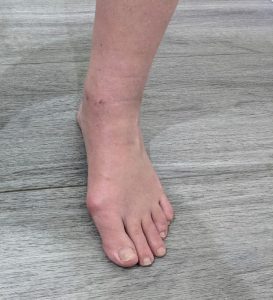
Noticed a lump forming on the inside of your big toe?
Struggling to fit into your usual shoes? That bump is a bunion, also referred to as Hallux Valgus. It is one of the most common foot deformities that develop slowly over time due to genetics, foot structure or mechanical factors.
A bunion happens when the big toe slowly drifts towards the second toe, changing the normal alignment of the bones, tendons and ligaments. Bunions are often painful. Some people only notice a visible lump, while others experience regular pain. Most bunions are tender in their early stages of development. A bursitis is a fluid filled lump in the soft tissue on the side of the bone. They appear red and swollen, causing inflammation and pain. Pressure from shoes can then aggravate the side of the foot.
Podiatrists will give specific advice to their patients about the correct shoes to purchase. Wide footwear is recommended to avoid further pressure on the joint. This also reduces the progression of the deformity. A standard women’s shoe is a B width, but now days footwear companies offer 2E and 4E widths.
Bunions don’t just affect how your foot looks — they can change how it works. Poor alignment of the big toe affects foot function and the way we walk. Studies have proven that bunions disturb a patients ability to balance on one foot. The bunion changes the way the foot pushes off when walking or running. This changes load distribution across the front of the foot. These is a direct increase in pressure on the big toe joint. This can lead to gradual pain and stiffness over time.
Contributing factors
Whilst ballet shoes and pointy toe high-heels have been linked to developing bunions, genetics play a big role. We don’t inherit a bunion gene but rather a certain foot type. People with flat or flexible feet, loose ligaments, or a family history of bunions may be more likely to develop one. Arthritis and previous trauma to the joint are other contributing factors. Rolling in of the foot, also known as excessive pronation impacts the loads on the big toe joint. Job occupations such as a dance career, workers that have to be on their feet for prolonged periods can also contribute to the developing bunion. Although more common in adults, the elderly, children and teenagers can develop bunions too.
The earlier a bunion is assessed, the better.
At Inspire Podiatry, we can give advice in regards to causes, footwear, foot biomechanics, orthotics and pain management. Early intervention is key for young adults as there is better success while their growth plates are still open. When caught early in the juvenile foot, night splints are an excellent option to treat the deformity 24/7. Treatments include but are not limited to: in shoe padding, fan strapping, interdigital spaces, appropriate footwear with wide fitting toe box, Western dry needling, foot mobilisation, shockwave therapy, balance, custom orthotics, activity modification, balance and strengthening exercises.
How do I know if I need surgery on my foot bunion?

Podiatrists will assess the severity of the bunion formation. Our podiatrists at Albany Creek may send you down the road for a weight bearing X-ray which is the best way to grade the degree of bunion formation. Keyhole surgery performed by a specialist foot and ankle orthopaedic surgeon can correct the bunion deformity. This minimally invasive procedure enables correction of the bump without having to open the joint capsule. It requires a patient to be in a post op shoe for 6 weeks following surgery. Inspire podiatrists will assess, refer and rehabilitate a patient following this procedure if required.
Bunion pain treated early will slow progression.
If your bunion is becoming painful or affecting your daily life, book an appointment today and let us help you stay active and comfortable.